Metabase: a data dashboard to run your business in 2026
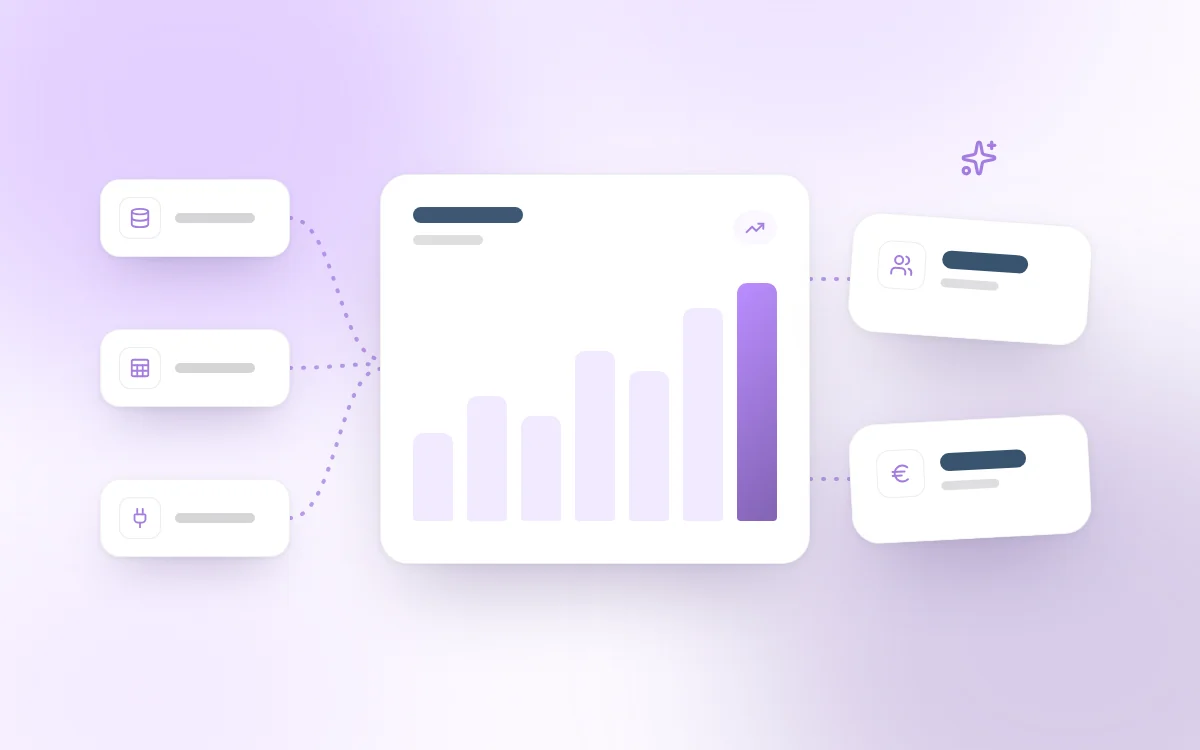
Metabase for SMBs: centralize your data, build dashboards and track your KPIs in real time. A comparison with Power BI and Looker, and the tool's limits.
 Tech · 8 min
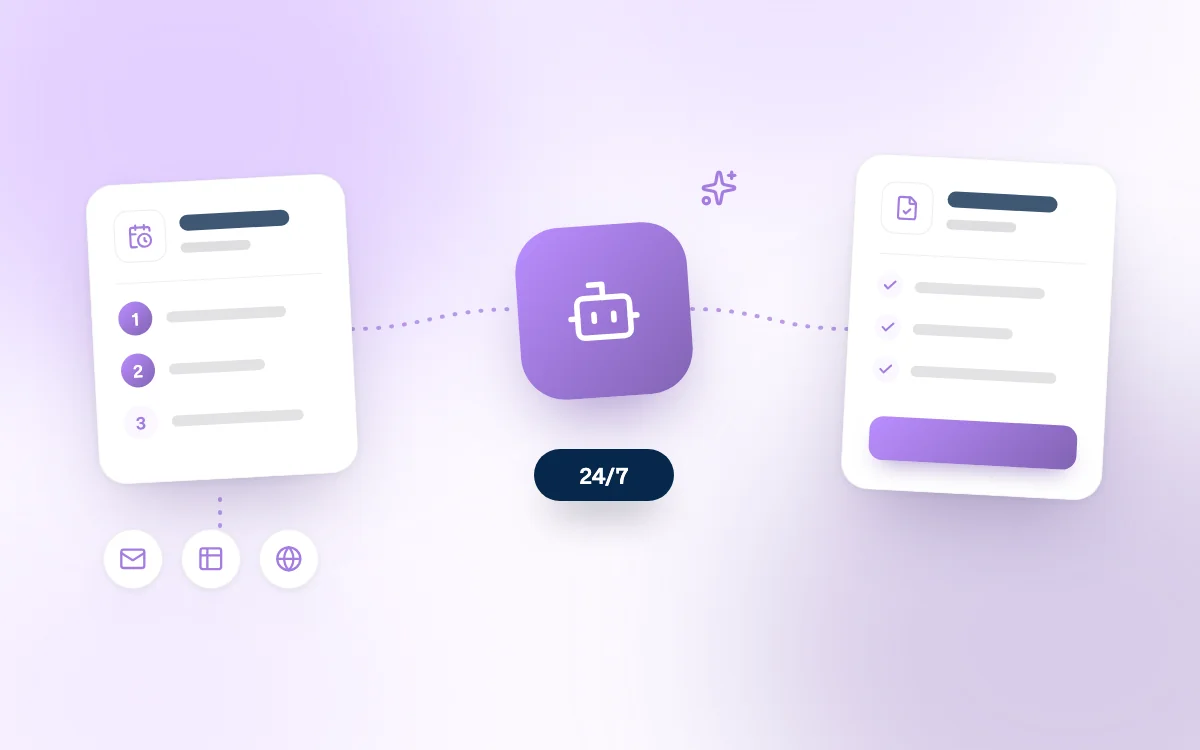
Announced on August 11, 2026, Grok Bot is not a new chatbot: it is a team of always-on AI coworkers, each with its own cloud computer, able to connect to your tools and finish the work right up to the human approval step.
This launch is part of the convergence between xAI (the Grok / X ecosystem) and Cursor. After SpaceX's agreement to acquire Anysphere (the company behind Cursor) in spring 2026, the two stacks are converging on the same promise: moving from AI that answers in a chat to AI that executes in your applications. Grok Bot is the first visible product of this merger, available in beta through SuperGrok Heavy, Cursor Ultra and Cursor Teams Premium, on desktop and iOS.
For a very small business, an SMB, a freelancer or a mid-sized company, the question is no longer "which model talks best", but which business workflow can run without you, at night, while you are in a client meeting.
Grok Bot is the AI agent system from xAI / SpaceXAI: persistent digital teammates (named "Bots") to whom you hand real work, not an isolated question.
According to the official documentation, a Bot:
So it is no longer an AI chatbot waiting for your next prompt. It is agentic AI focused on business outcomes: a deliverable ready for review, not a wall of text you have to turn into something yourself.
At Fragments Studio, we see it as the logical next step of what we already described about multi-agent systems in the enterprise, but this time packaged for the business owner, not just for the tech team.
In practice, you create a Bot, give it a role and a scope, grant it access to the tools it needs, then talk to it like a coworker (on desktop or iPhone).
| Capability | What it changes day to day |
|---|---|
| Dedicated 24/7 computer | The Bot keeps going when your PC is off |
| Connection to existing tools | CRM, email, Slack, spreadsheets, ads, ATS... without rewriting everything |
| Routines & skills | A validated process becomes repeatable (overnight, Monday morning, etc.) |
| Multi-Bots | A "prospecting" Bot, an "admin" Bot, a "monitoring" Bot in parallel |
| Human-in-the-loop | Sending emails, sign-ups, budget changes: behind your OK |
Two technical integration modes coexist: connectors / MCP when the tool exposes them, and interface control when there is only the web or a desktop application. It is the same challenge we address on the MCP server and business software side: the more readable your systems are to an agent, the higher the ROI, and the less you depend on "blind clicking".
The official use cases (outbound sales, talent, paid media, expenses, account health, chief of staff...) translate very well to the reality of a mid-sized French organization. Here are some down-to-earth scenarios.
Goal: every morning, a list of qualified prospects + LinkedIn / email drafts to approve.
The Bot researches the accounts in a CRM view, scores them against your ICP, excludes those already in a sequence, writes in your tone, and stops before sending. For an SMB without a dedicated SDR, this is often the first visible ROI.
→ Combine with broader orchestration through n8n and business automation if you want to connect invoicing, quotes and follow-ups on the same thread.
Goal: a source-linked summary of what has changed since yesterday (emails, Slack, calendar, notes), filtered by your priorities.
Ideal for the freelancer or the CEO of a very small business who has no assistant: the Bot does not replace the decision, it prepares the queue.
Goal: a weekly watchlist of at-risk accounts (drop in usage, support tickets, upcoming renewal) with evidence and a suggested next action, without contacting the customer on its own.
Highly relevant for a mid-sized company or a SaaS / services SMB that manages 30-200 accounts without a dedicated success team.
Goal: weekly reconciliation of expenses / receipts / internal policy, draft reminders to employees, flagged exceptions.
Less "sexy" than prospecting, but often the first process the business owner agrees to delegate.
Goal: pulling campaign performance, comparing it to the target CAC, reallocation recommendations, a Slack draft, without touching budgets without your approval.
Useful as soon as a very small business or SMB spends on Google Ads or Meta without a full-time media buyer.
Goal: source 15-20 profiles matching a job description, exclude those already in the ATS, prepare the messages, without contacting anyone.
Goal: reproduce a bug in staging, a repro pack (steps, screenshots, console), or a latency investigation separating facts from hypotheses.
In this area, Grok Bot complements rather than replaces coding agents such as Claude Code or the mobile control already covered with Cursor for iOS: the Bot handles the work around business tools; the agentic IDE handles the code.
| Need | Typical tool | When Grok Bot makes sense |
|---|---|---|
| Reliable triggers (invoice → PDF → Drive) | n8n / Make | Stable rules, predictable volume |
| A coworker who reads, decides, clicks in 5 apps | Grok Bot | Fuzzy processes, multiple tools, few APIs |
| Deep connection to business software | MCP + AI integration | Sensitive data, auditability |
| Custom team of agents | AI agents agency | Critical processes, compliance, quantified ROI |
The pragmatic rule for an SMB: prototype the workflow with a Bot (read + draft + approval), then industrialize what becomes critical (MCP, fine-grained permissions, logs, AI Act) with a well-scoped integration. On the regulatory side, keep our AI Act guide for SMBs close at hand.
On access: the beta is packaged in premium subscriptions (SuperGrok Heavy, Cursor Ultra, Cursor Teams Premium). For many very small businesses, the entry ticket remains high: hence the value of validating the use case before multiplying seats, or of building an equivalent agent on your own stack with a custom AI integration.
What is the difference between Grok and Grok Bot?
Grok is the model (the reasoning). Grok Bot is the agentic product: a named coworker, with a cloud computer, memory and the ability to act in your tools.
Why are Cursor and X / xAI mentioned together?
Because the product comes out of the industrial convergence between the Grok ecosystem and Cursor: distribution, apps and subscriber access are already intertwined. Grok Bot is as much a product signal as a signal of strategic convergence.
Does Grok Bot replace n8n or Zapier?
No. Deterministic automations remain simpler and cheaper for stable flows. Grok Bot excels when the work requires judgment, research and multi-app navigation.
Is it suitable for a freelancer?
Yes on paper (digest, prospecting, admin), subject to the subscription cost and the discipline of approvals. Often, a first "chief of staff" Bot + a "pipeline" Bot is enough.
What about data security?
Any Bot that connects to your mailboxes and CRM must be treated like an employee: least privilege, test accounts, approvals on external actions. The xAI docs insist on this point, and it is also the framework we apply in AI agent development.
Grok Bot formalizes what the market has been promising for months: agents that do not just generate text, but that own a workstation, learn your routines and deliver a result ready for approval. The xAI / X ↔ Cursor convergence accelerates this shift from "chat" to "digital labor".
For French organizations, from independent professionals to mid-sized companies, the right angle is not to "test Grok because it is new", it is to choose 1 to 3 workflows with a clear ROI (prospecting, executive digest, admin, customer health) and industrialize them with the right safeguards.
Follow Fragments Studio on Google
Add us to your preferred sources and our articles get surfaced first in Top Stories, AI Overviews and AI Mode.
 Tech · 6 min
Metabase for SMBs: centralize your data, build dashboards and track your KPIs in real time. A comparison with Power BI and Looker, and the tool's limits.
 Tech · 6 min
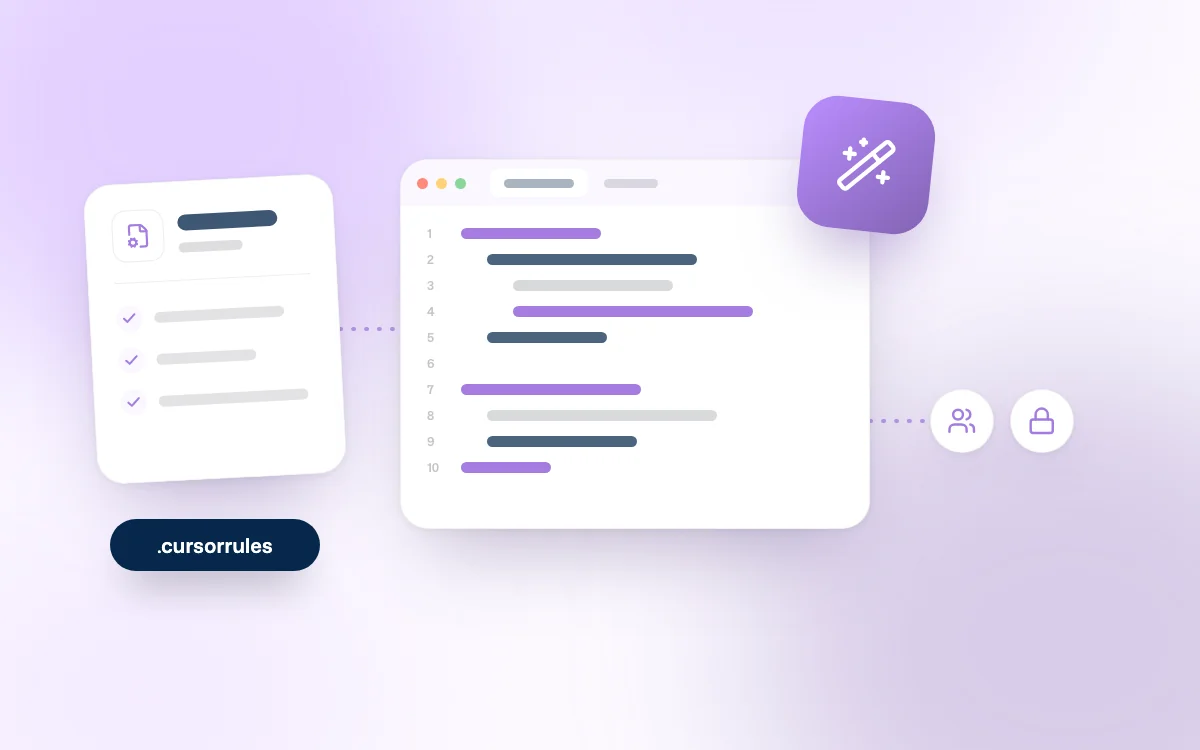
Using Cursor as a team in 2026: how to set up .cursorrules, share context, keep your code secure and compare Cursor with Claude Code and Copilot.
 Tech · 7 min
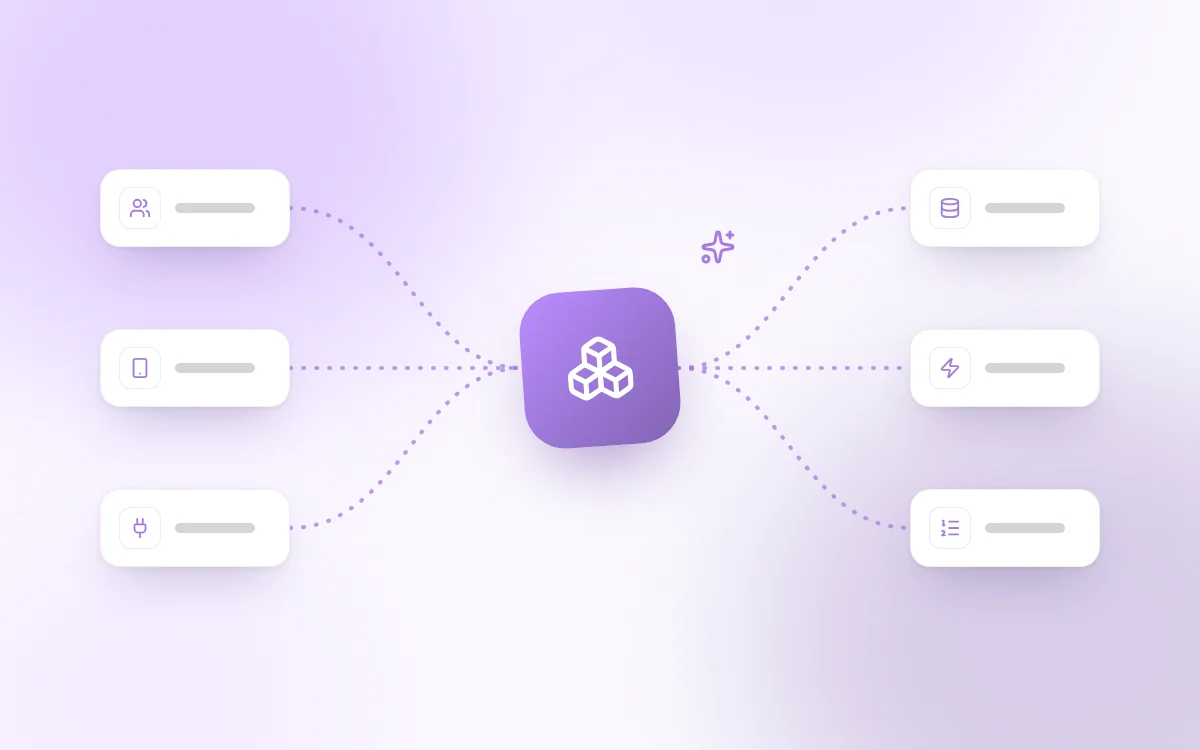
Scalable software architecture for SaaS in 2026: modular monolith or microservices, horizontal scaling, caching, message queues and the mistakes to avoid.
Fragments Studio handles everything: from strategy to production.
Discuss my project