Metabase: a data dashboard to run your business in 2026
Metabase for SMBs: centralize your data, build dashboards and track your KPIs in real time. A comparison with Power BI and Looker, and the tool's limits.
 Tech · 6 min
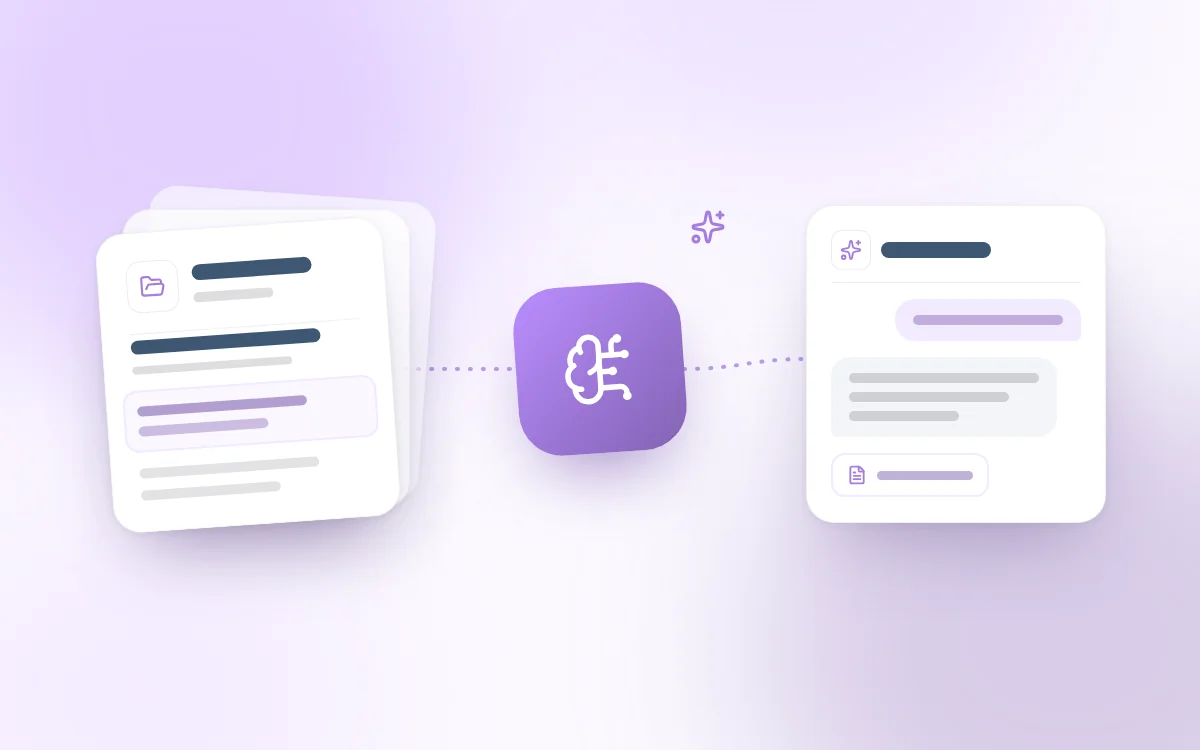
In 2026, RAG (Retrieval-Augmented Generation) has become the reference architecture for connecting language models to private knowledge. Rather than retraining expensive models, companies now use this method to guarantee reliable, sourced answers that are updated in real time from their own databases.
In 2026, the question is no longer whether a company should use AI, but how it can trust it. The main obstacle remains hallucination: standard language models, however powerful, do not know about your latest contracts, your internal technical specifications or how your inventory changed this morning. This is where RAG (Retrieval-Augmented Generation) comes in. This technology lets an AI consult your documents before answering, acting like an ultra-fast librarian who hands the model the right pages before it opens its mouth.
RAG is a context-enrichment method that consists of feeding the model relevant information extracted from an external knowledge base at query time. Unlike fine-tuning, which modifies the model's internal weights to teach it a style or a domain, RAG simply gives it access to a documentary "working memory".
At Fragments Studio, we see three main reasons why our clients favor RAG in 2026:
Building a document-based chatbot is no longer just about dropping a PDF into a chat window. To guarantee industrial-grade accuracy, a modern RAG pipeline follows a rigorous data processing workflow.
Documents (PDF, Word, Slack, Notion) are split into pieces called chunks. In 2026, smart semantic splitting has replaced splitting by character count, which preserves the coherence of a paragraph or a table.
Each chunk is converted into a sequence of numbers called an embedding. These vectors capture the deep meaning of the text. They are stored in a vector database (such as Qdrant, Pinecone or pgvector).
When a user asks a question, the system looks for the chunks whose vectors are semantically closest. The big novelty of 2026 is the systematic use of Reranking: a second, smaller model re-evaluates the relevance of the top 50 results and keeps only the 5 most critical ones. According to the latest benchmarks, this boosts the system's accuracy by nearly 35%.
The LLM receives the question along with the 5 selected chunks. Its instruction is: "Use only the information provided to answer. If the answer is not there, say that you do not know."
In 2026, the technical choice depends on the nature of your need. Here is how we steer our architecture decisions:
| Criterion | RAG | Fine-tuning | Long Context (e.g., Gemini) |
|---|---|---|---|
| Main goal | Bring in new facts | Change style/reasoning | Analyze 1-2 large files |
| Update frequency | Dynamic (instant) | Static (slow) | One-off |
| Proof / Citation | Yes (sources cited) | No | Possible but limited |
| Operating cost | Low to Moderate | High | High (cost per token) |
Fine-tuning is now reserved for very specific cases, such as learning complex industry jargon or an ultra-rigid output format. For 95% of business needs, RAG combined with an agentic AI strategy is the most cost-effective solution.
Deploying a RAG is easy; making it reliable is an engineering challenge. Here are the most common mistakes we fix during our audits:
To avoid these pitfalls, we often recommend starting with a scoping phase. You can read our guide on how to launch a first AI project in an SMB to structure your approach.
The cost of a RAG system breaks down into three pillars: the vector database infrastructure, LLM token consumption and data pipeline maintenance. For an SMB processing around 10,000 documents, the infrastructure cost (excluding development) generally ranges from €100 to €500 per month. The main investment lies in setting up the ingestion pipeline and optimizing the prompts.
Unlike fine-tuning, which requires data scientists specialized in Deep Learning, RAG is within reach of AI developers who know frameworks such as LangChain or LlamaIndex. The move toward agentic AI (where the AI itself decides when and how to search your data) is the next logical step to maximize this ROI. Find out how agentic AI is transforming business software by becoming truly autonomous collaborators.
Does RAG guarantee 0% hallucinations?
No, but it reduces them drastically. By forcing the model to cite its sources and by using reranking techniques, you reach reliability rates close to 98% on well-structured knowledge bases.
Is my data secure with RAG?
Yes, if the architecture is well designed. You can use Open Source models hosted on your own servers, or cloud solutions with guarantees that your data will not be used for training (Azure OpenAI, AWS Bedrock).
How long does it take to set up a RAG?
A prototype (MVP) can be deployed in 2 to 4 weeks. A robust system, integrated with your business tools (CRM, ERP) and handling access permissions, generally takes 2 to 3 months of development.
Can RAG be used with images or videos?
Absolutely. In 2026, multimodal RAG is a reality. Embedding models capable of vectorizing visual content are used to enable searches such as: "Find the part of the training video where fire safety is discussed."
RAG is much more than an alternative to fine-tuning: it is the essential bridge between the computing power of general-purpose models and the specificity of your private data. In 2026, mastering your vector architecture has become a major competitive advantage for turning a simple AI into a tireless domain expert.
At Fragments Studio, we design custom RAG architectures to turn your dormant documents into productivity drivers.
Follow Fragments Studio on Google
Add us to your preferred sources and our articles get surfaced first in Top Stories, AI Overviews and AI Mode.
 Tech · 6 min
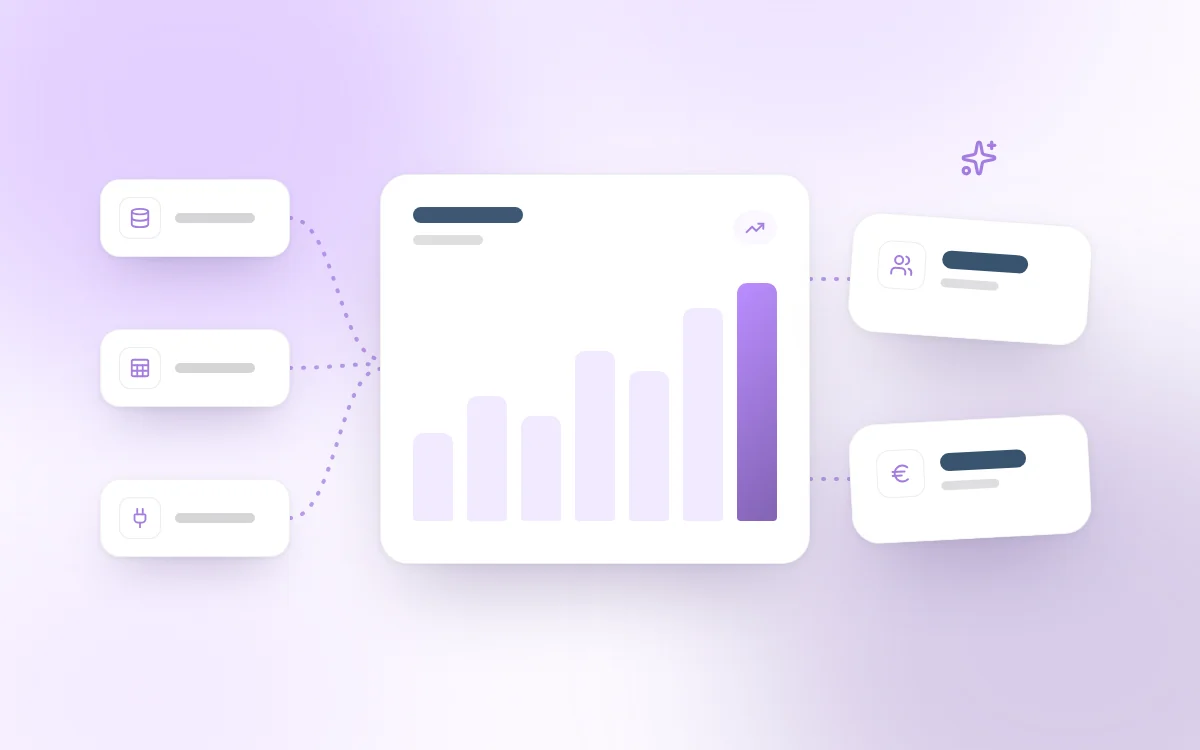
Metabase for SMBs: centralize your data, build dashboards and track your KPIs in real time. A comparison with Power BI and Looker, and the tool's limits.
 Tech · 6 min
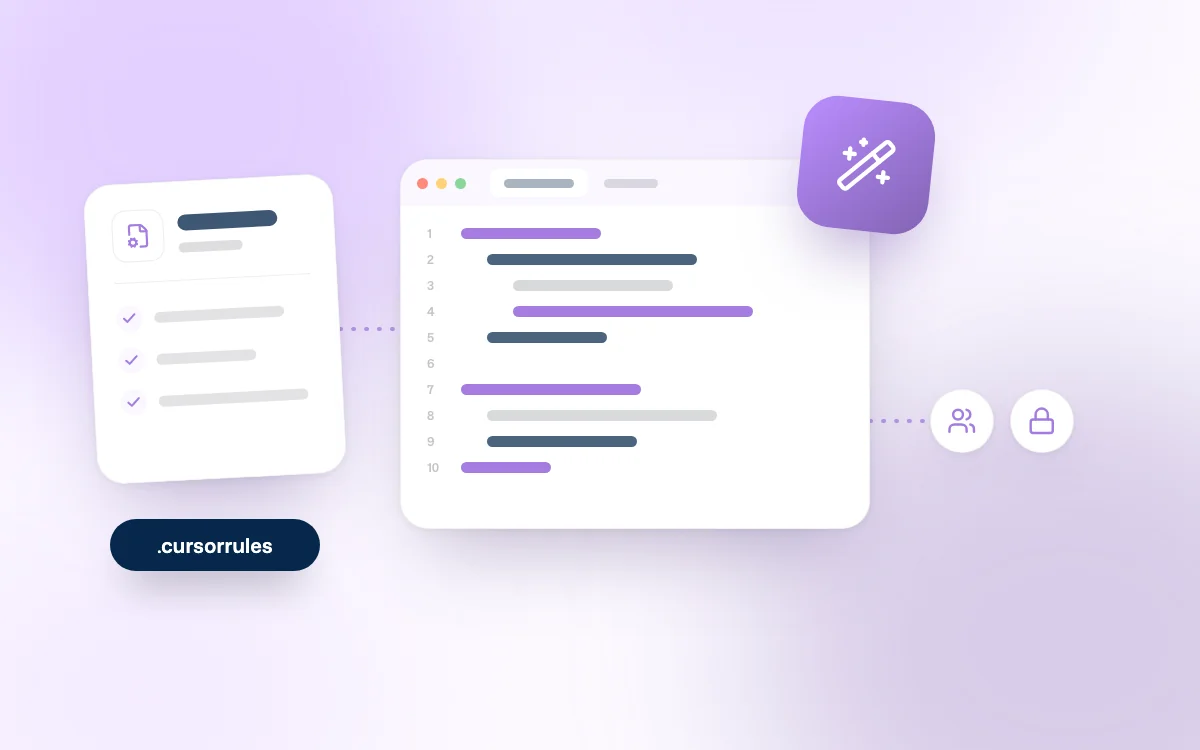
Using Cursor as a team in 2026: how to set up .cursorrules, share context, keep your code secure and compare Cursor with Claude Code and Copilot.
 Tech · 7 min
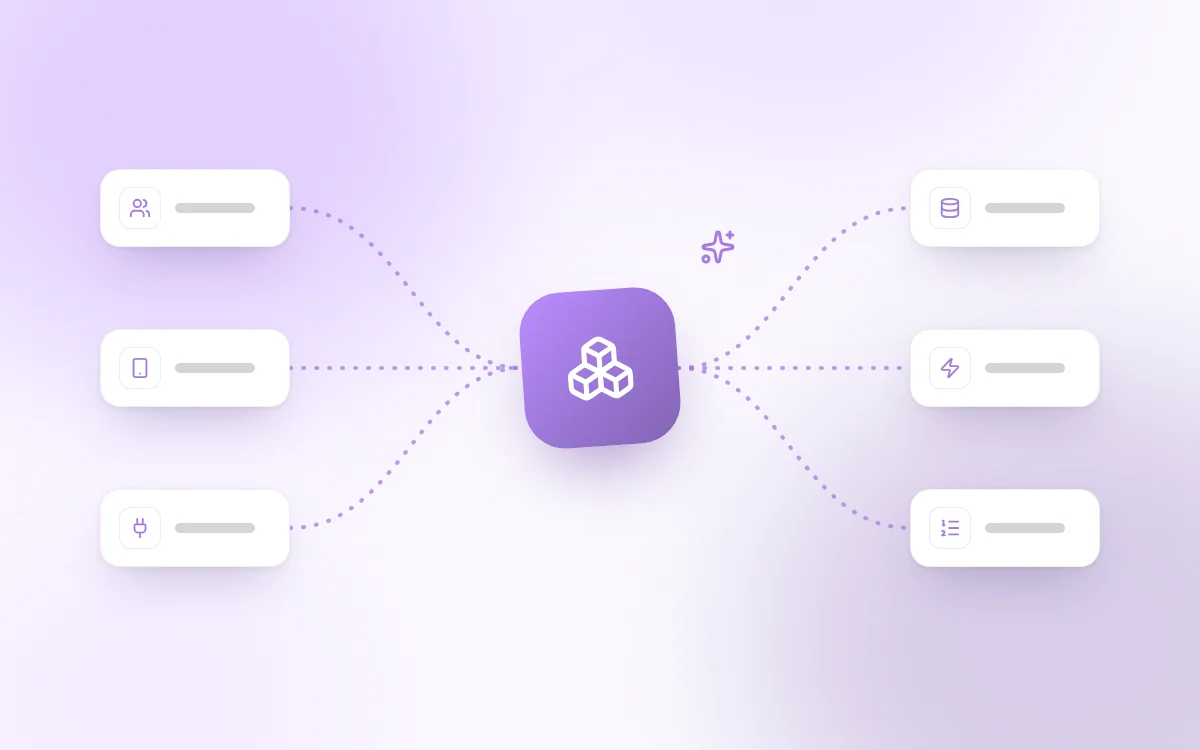
Scalable software architecture for SaaS in 2026: modular monolith or microservices, horizontal scaling, caching, message queues and the mistakes to avoid.
Fragments Studio handles everything: from strategy to production.
Discuss my project