Metabase: a data dashboard to run your business in 2026
Metabase for SMBs: centralize your data, build dashboards and track your KPIs in real time. A comparison with Power BI and Looker, and the tool's limits.
 Tech · 6 min
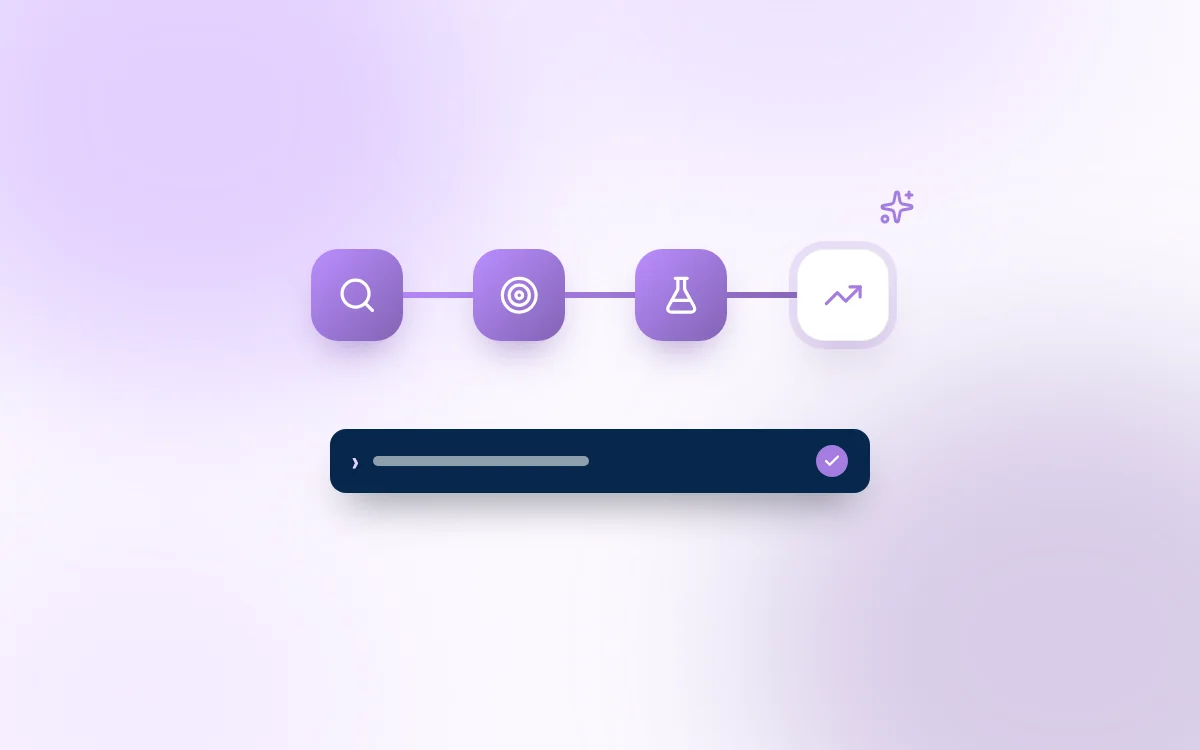
Too many SMBs launch their first AI project by starting with the technology. The result: blown budgets, frustrated teams, and business value nowhere to be found. Here is a 4-step method that flips the logic and puts the business problem at the center, for a first measurable win in 2-4 weeks.
The main cause of failure for AI projects in SMBs is not technical: it is the lack of a clearly defined business problem. According to several recent studies on AI adoption, companies that start with "let's try ChatGPT" or "we need AI" without any operational grounding get a negative ROI in 68% of cases.
At Fragments Studio, we consistently see the same pattern: the projects that succeed are the ones that start from a documented pain point on the ground, not from an appealing technology. AI is not an end in itself, it is a way to automate repetitive tasks, reduce manual errors, or speed up existing processes.
This 4-step method, inspired by 2026 best practices and tested with our SMB clients, guides you toward a fast, budgeted, and measurable first win.
Never start with the solution: start by mapping your current processes.
The goal of this first step is to pinpoint exactly where automation can create measurable value in your organization.
Run a half-day workshop with your operational teams (not just managers) and list the repetitive manual tasks that consume the most time. For each task identified, estimate:
Use a simple Impact/Feasibility matrix to prioritize: impact is measured as current cost + error risk, feasibility as data availability + process structure.
An e-commerce SMB with 50 employees runs this audit and uncovers three major pain points:
Customer returns come out on top of the matrix (high impact, existing data, structured process). It is the ideal candidate for a first AI POC.
Resist the temptation to automate everything at once.
According to feedback from AI integrators, the projects that succeed in SMBs target a single process with a predictable ROI above 200% and minimal risk.
The selection criteria for a good first use case:
Avoid overly ambitious use cases for a first project: sales forecasting, complex semantic analysis of legal documents, real-time omnichannel personalization.
Favor quick wins: automating FAQ answers, classifying incoming documents, enriching databases, generating meeting minutes.
Rather than building a custom AI CRM (a 6-12 month project, €80k-150k), the e-commerce SMB chooses to automate only the classification of customer returns.
The current process: an operator reads each return email, extracts the reason (wrong size, product defect, change of mind), updates inventory, and sorts the product. This workflow is repetitive, structured, and based on simple text data.
Expected impact: 70% reduction in processing time (from 15 hours to 4-5 hours per week). Low risk: the data can be anonymized, the process does not involve critical decisions, and human validation remains possible when in doubt.
A POC (Proof of Concept) is not an MVP (Minimum Viable Product).
The goal is to validate that the automation works technically and delivers the expected business value, on a very narrow scope.
According to AI integration benchmarks for SMBs, an effective POC lasts 2 to 4 weeks and costs between €5,000 and €15,000.
The POC method in 4 micro-steps:
Do not aim for perfection: an 80-85% success rate on a POC is excellent if the time savings remain significant. A human validates the ambiguous cases.
The e-commerce SMB launches a POC with these characteristics:
Result after 3 weeks: 12 hours saved per week, 88% correct classification rate, operator satisfaction 9/10. The ROI is validated: a projected annual gain of €25,000 for an initial investment of €8,000.
A technically successful POC is not necessarily a profitable one.
This last step consists of measuring the real ROI over 1 to 2 months of operation, then deciding: scale the project, pivot to another use case, or stop.
The ROI formula: ROI = (Annual gains - Annual costs) / Annual costs × 100
Where:
Track these KPIs on a simple dashboard (Google Sheets is enough):
If the ROI exceeds 200% and adoption is strong, scale: roll it out gradually to the whole team, train users, document the process. If the ROI is below 100%, pivot to the second pain point identified in step 1.
After 2 months running the POC, the e-commerce SMB measures:
The ROI is positive but below the 200% target. The team identifies two optimization levers: extending the workflow to after-sales service claims (same logic, 5 more hours saved) and automating inventory updates (indirect gain through fewer errors). After these adjustments, the ROI rises to 280% over 6 months. The company then decides to launch a second AI project: automating recurring invoicing.
Beyond this method, certain mistakes regularly sabotage first AI projects in SMBs:
Starting with the technology rather than the problem. You are not trying to "do AI", you are trying to solve a business pain point. Technology is a means, never an end.
Aiming too big from the start. A successful AI project in an SMB always starts small: one process, one team, one KPI. Then you scale.
Ignoring data quality. If your data is nonexistent, unstructured, or wrong, AI will amplify the problem. Clean up before you automate.
Not involving end users. An AI workflow designed without the operators who will use it every day is doomed to fail. Co-build it from the POC stage.
Underestimating change management. AI changes work habits. Train, support, and celebrate the first wins to bring teams on board.
At Fragments Studio, we see that projects that follow this method achieve a success rate above 80%, versus less than 30% for "technology-first" approaches. The difference fits in one sentence: always start from the business problem, never from the technology solution.
What budget should you plan for a first AI project in an SMB?
A validation POC costs between €5,000 and €15,000, depending on the complexity of the process and the tools chosen (no-code SaaS vs. custom development). Full deployment to the whole team usually adds 30% to 50% of that amount. Plan a total budget of €10,000 to €25,000 for a first project including the POC, deployment, and 6 months of maintenance.
How long does a first AI project take from POC to deployment?
A well-scoped POC takes 2 to 4 weeks. If the ROI is validated, full deployment (training, adjustments, documentation) takes another 2 to 4 weeks. Plan 1.5 to 3 months in total between launch and widespread adoption, with ROI measurement over the following 2 months.
Do you need an in-house tech team to launch an AI project?
No, not necessarily. For a first POC based on SaaS tools (Zapier, Make, OpenAI API), a trained business project manager or a specialized freelancer is enough. However, if you are aiming for custom development or a complex integration with your information system, support from a technical team (in-house or external) becomes essential. At Fragments Studio, we regularly support SMBs with no in-house tech resources on their first AI project.
How do you convince your leadership to launch a first AI project?
Present a business case with numbers: identify a documented business pain point (time lost, current cost, errors), estimate the potential gain (ROI >200%), and propose a POC with a limited budget (€5k-15k) and a short timeline (2-4 weeks). Leadership rarely approves AI as a concept, but always approves a project that promises a fast, measurable return. Use the Impact/Feasibility matrix to make the decision objective.
Launching a first AI project in an SMB requires neither a huge budget, nor a team of data scientists, nor a full digital transformation. All it takes is a rigorous 4-step method: audit your business pain points, choose a high-impact, low-risk use case, launch a fast, budgeted POC, then measure the real ROI before scaling.
This pragmatic approach flips the usual logic: you do not start from the technology, but from the problem on the ground. The result: projects that create measurable value in a few weeks, teams on board from day one, and an ROI above 200% in 8 cases out of 10.
AI in SMBs is not a distant revolution, it is an operational efficiency lever you can activate right away. Provided you start small, measure precisely, and build on quick wins rather than on technology promises.
Have you identified a time-consuming business pain point and want to estimate the ROI of a first AI project?
Follow Fragments Studio on Google
Add us to your preferred sources and our articles get surfaced first in Top Stories, AI Overviews and AI Mode.
 Tech · 6 min
Metabase for SMBs: centralize your data, build dashboards and track your KPIs in real time. A comparison with Power BI and Looker, and the tool's limits.
 Tech · 6 min
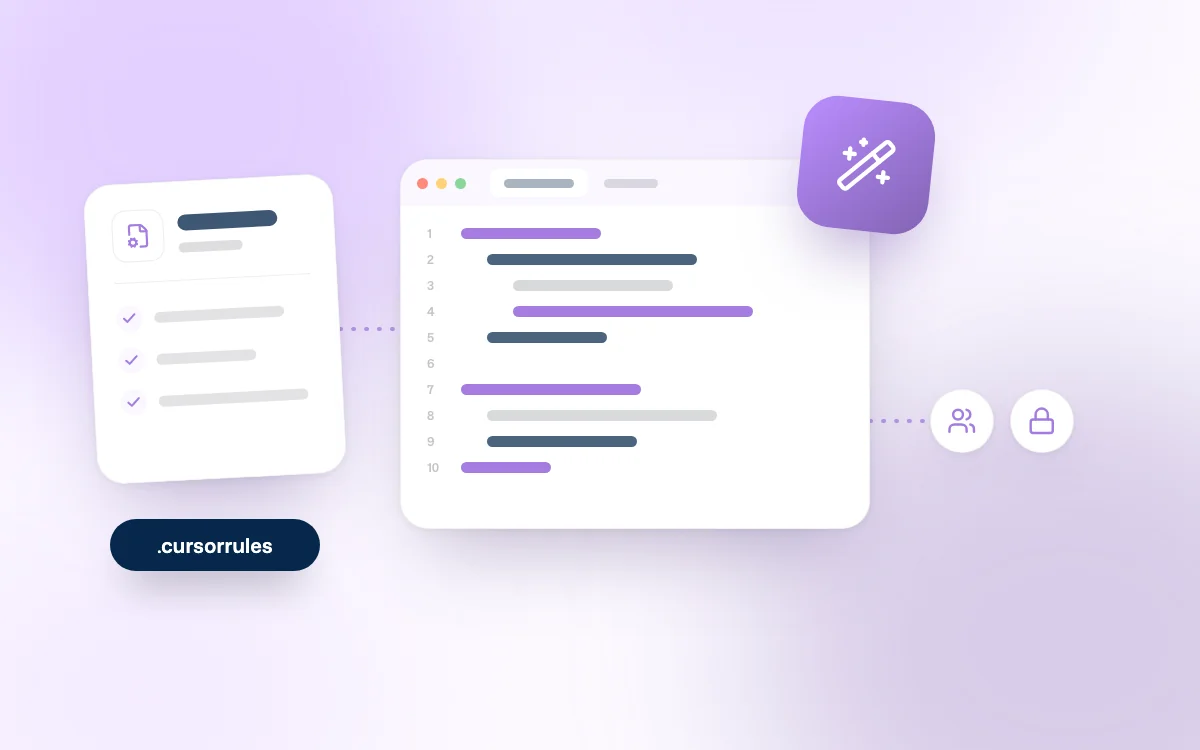
Using Cursor as a team in 2026: how to set up .cursorrules, share context, keep your code secure and compare Cursor with Claude Code and Copilot.
 Tech · 7 min
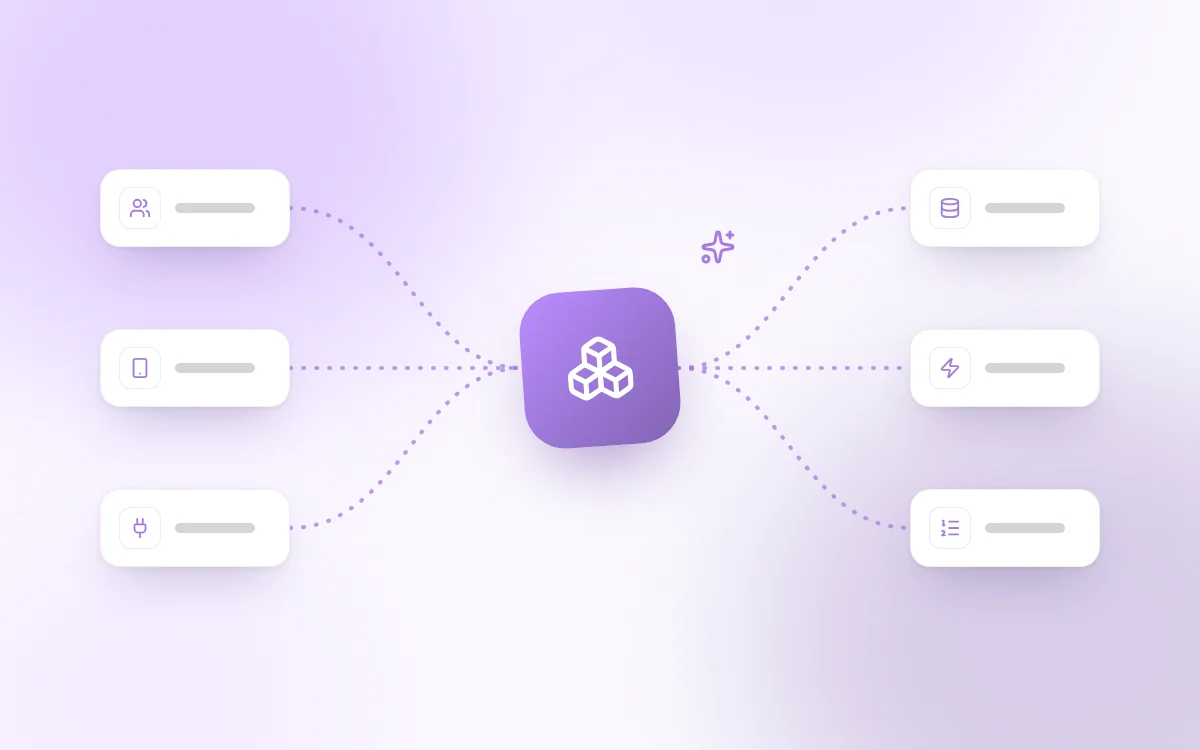
Scalable software architecture for SaaS in 2026: modular monolith or microservices, horizontal scaling, caching, message queues and the mistakes to avoid.
Fragments Studio handles everything: from strategy to production.
Discuss my project