Metabase: a data dashboard to run your business in 2026
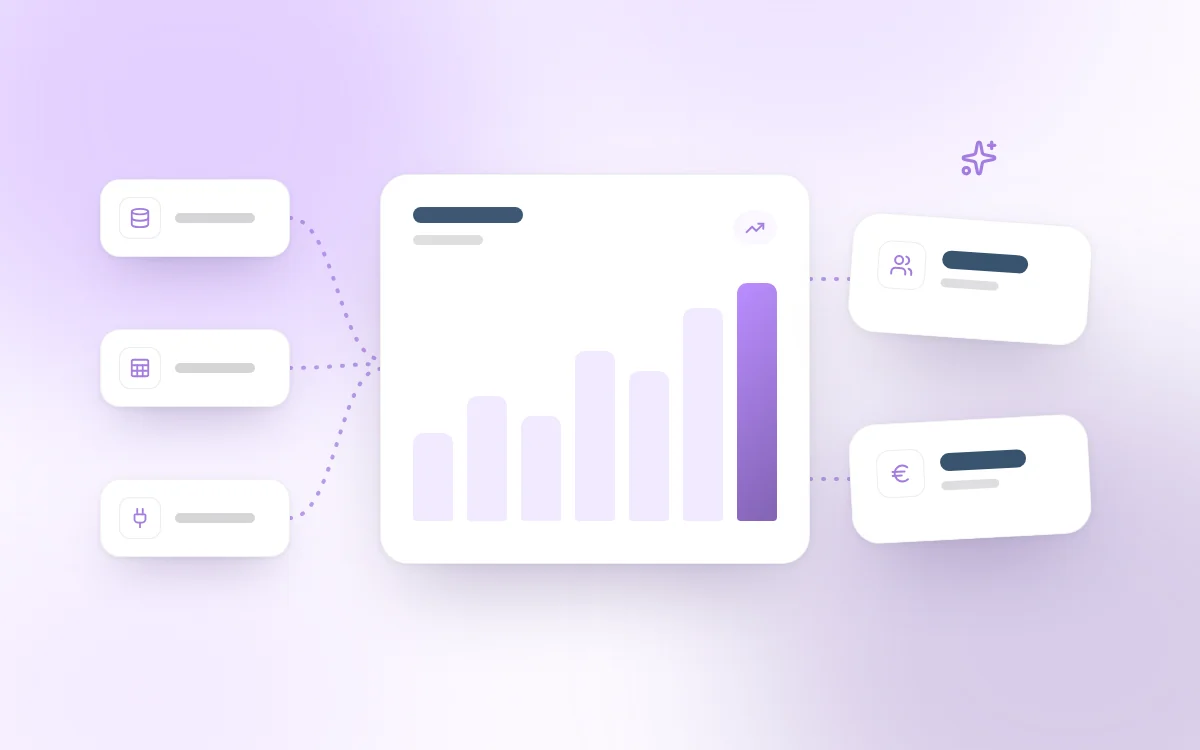
Metabase for SMBs: centralize your data, build dashboards and track your KPIs in real time. A comparison with Power BI and Looker, and the tool's limits.
 Tech · 7 min
Artificial intelligence is no longer a technology reserved for Silicon Valley giants or research labs. For an SMB leader, understanding AI has become a concrete competitive lever to automate repetitive tasks, optimize margins and improve customer relationships without excessive technical complexity.
Artificial Intelligence (AI) is defined as a set of technologies that allow computer systems to perform tasks that usually require human intelligence, such as visual perception, speech recognition or decision-making. For a business, AI acts as a force multiplier: it makes it possible to process volumes of data that would be impossible to handle manually and extract value from them.
Adoption of these technologies is accelerating massively across the French economy. According to the France Num 2026 Barometer (the French government's survey of small business digitalization), 34% of French SMBs have now integrated at least one AI solution into their operational processes. This figure reflects a major transition: AI is no longer seen as a gadget, but as a productivity tool. In addition, 68% of business leaders consider AI to be the main growth lever for the next three years, and 45% of companies that have taken the plunge report an improvement in their operating margin within the first year of use.
At Fragments Studio, we see every day that the barrier is no longer technological, but educational. To tap into this potential, it is essential to distinguish the different forms this technology can take.
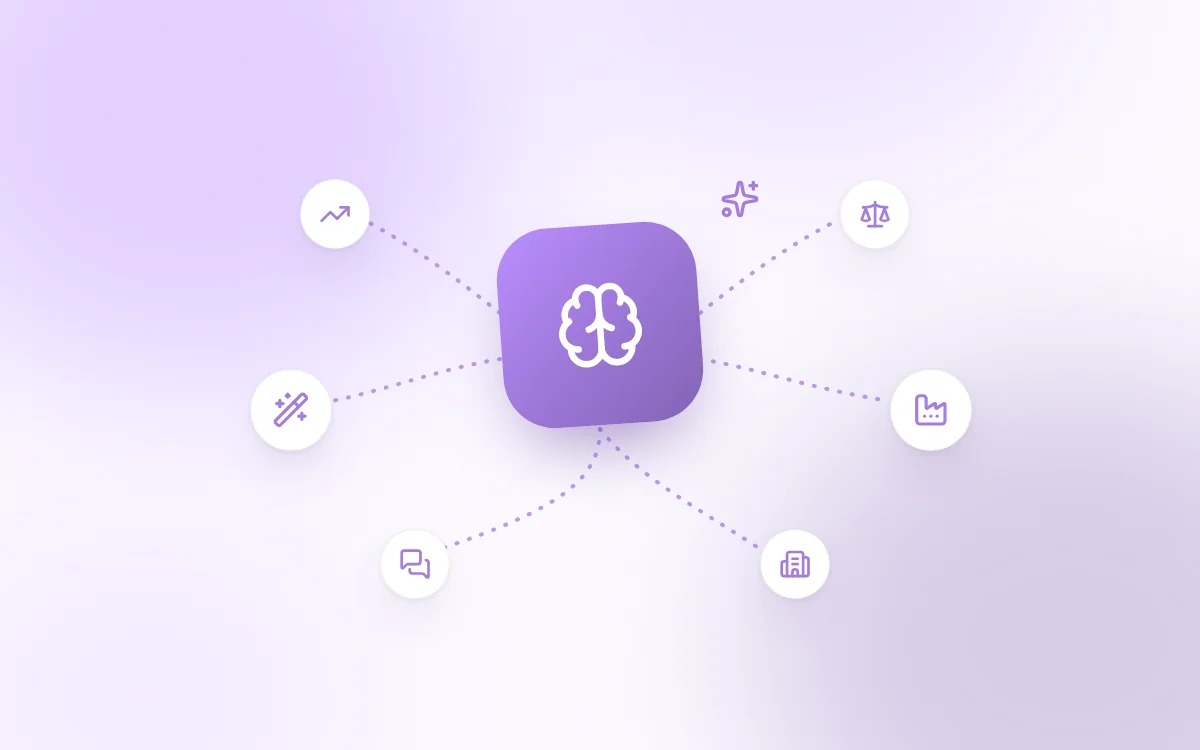
For a business leader, AI should not be seen as a monolithic block, but as a toolbox. There are five main families, each addressing specific business problems.
Predictive AI uses Machine Learning algorithms to analyze historical data and identify future trends. It answers the question: "What is likely to happen?".
This is the family that popularized AI with tools like ChatGPT. Generative AI can create new, original content (text, images, computer code, sounds) from a simple instruction in natural language.
Conversational AI (or NLP, for Natural Language Processing) allows machines to understand, interpret and respond to human language fluidly, whether written or spoken.
Decision AI (or prescriptive AI) goes further than simple prediction. It analyzes a multitude of complex scenarios to recommend the best action to take based on your objectives (cost, time, quality).
Here, intelligence meets mechanics. Robotic AI gives physical machines perception capabilities (computer vision) so they can act autonomously in a changing environment.
The classic mistake is wanting to "do AI" without a specific goal. At Fragments Studio, we recommend a pragmatic approach centered on ROI (Return on Investment).
Start by identifying your "friction points": which repetitive tasks eat up your experts' time? If your support team spends 4 hours a day answering the same questions, conversational AI is your priority. If your cash flow suffers from inaccurate inventory management, turn to predictive AI.
Integration can be done through off-the-shelf tools (SaaS) or by developing a custom AI solution so you keep full ownership of your data and algorithms. This second option is often the most profitable in the long run for SMBs with specific know-how to protect.
Is AI too expensive for a small company? No, the investment has become scalable. Many solutions are available as affordable monthly subscriptions. The cost of a custom project should be weighed against the productivity gain: the tool often pays for itself in less than 18 months.
Do you need to be an IT expert to use AI? Not at all. The current trend is toward "No-Code" and natural language interfaces. A business leader needs to understand what AI can do (the strategy), but technical execution can be delegated to specialized partners or handled by intuitive tools.
Is my data safe with AI? This is a crucial point of vigilance. When you use public AI, your data may be used to train the models. For an SMB, it is recommended to use private instances or GDPR-compliant solutions to guarantee the confidentiality of your trade secrets.
Will AI replace my employees? History shows that AI replaces tasks, not jobs. It frees your team members from low-value work so they can focus on expertise, advice and human relationships, where machines remain limited.
Artificial intelligence is the most powerful transformation lever of this decade for SMBs. By understanding the 5 families of AI, you move from a spectator's position to that of a decision-maker. The challenge is not to become a tech company, but to use technology to remain a high-performing, agile and human company. Taking action starts with a simple diagnosis of your needs and targeted experimentation.
Integrating AI requires a clear vision and rigorous technical execution to deliver real added value.
Follow Fragments Studio on Google
Add us to your preferred sources and our articles get surfaced first in Top Stories, AI Overviews and AI Mode.
 Tech · 6 min
Metabase for SMBs: centralize your data, build dashboards and track your KPIs in real time. A comparison with Power BI and Looker, and the tool's limits.
 Tech · 6 min
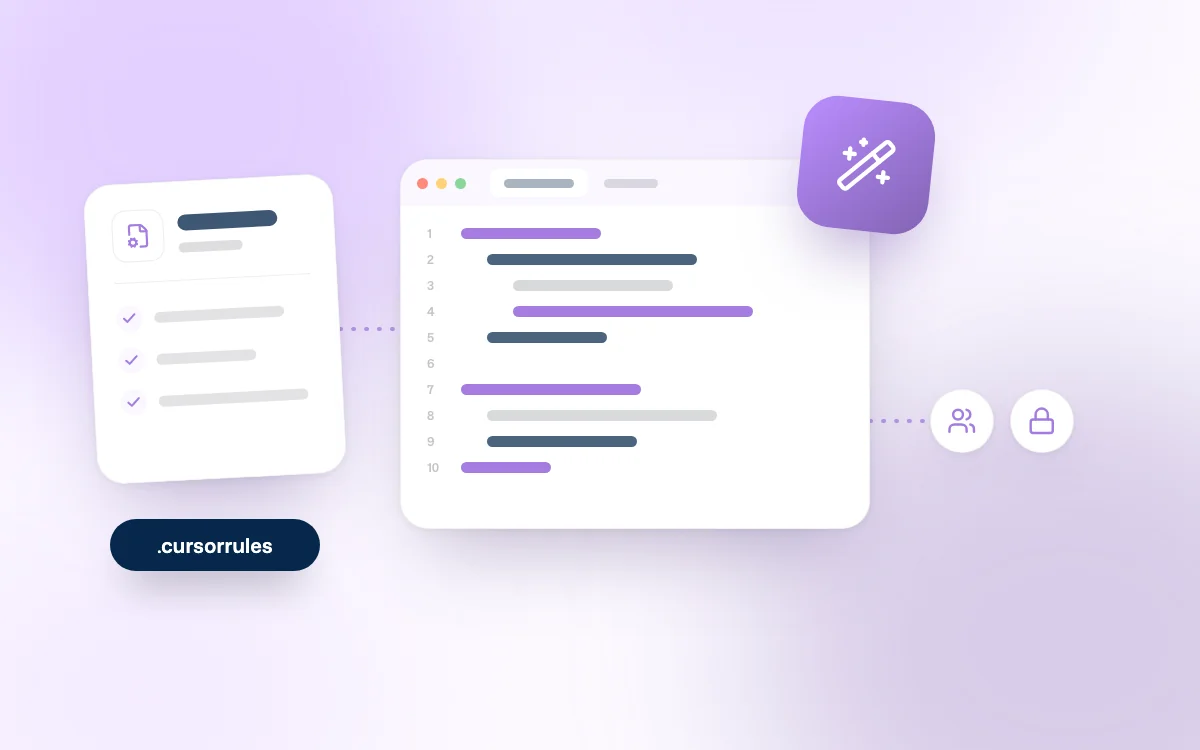
Using Cursor as a team in 2026: how to set up .cursorrules, share context, keep your code secure and compare Cursor with Claude Code and Copilot.
 Tech · 7 min
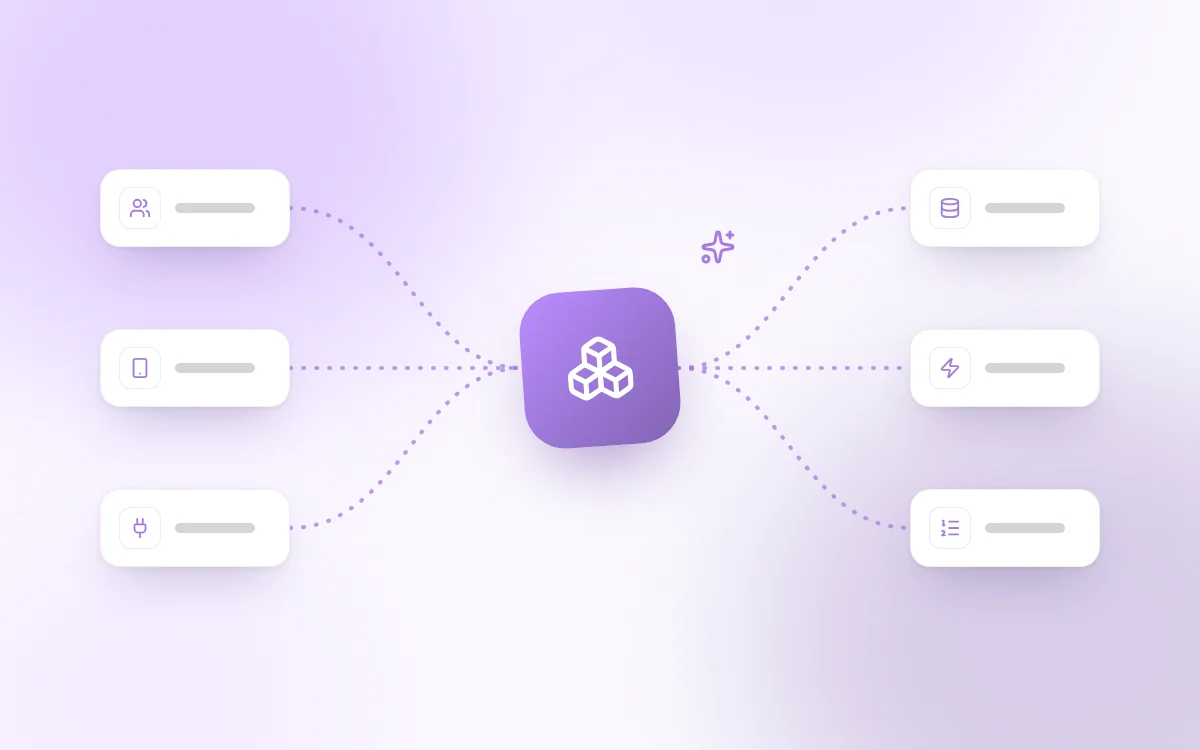
Scalable software architecture for SaaS in 2026: modular monolith or microservices, horizontal scaling, caching, message queues and the mistakes to avoid.
Fragments Studio handles everything: from strategy to production.
Discuss my project