Design system: building without debt in 2026
How to build a high-performing design system in 2026 without creating a bloated monster. A complete guide to tokens, Storybook and design governance.
 Design · 6 min
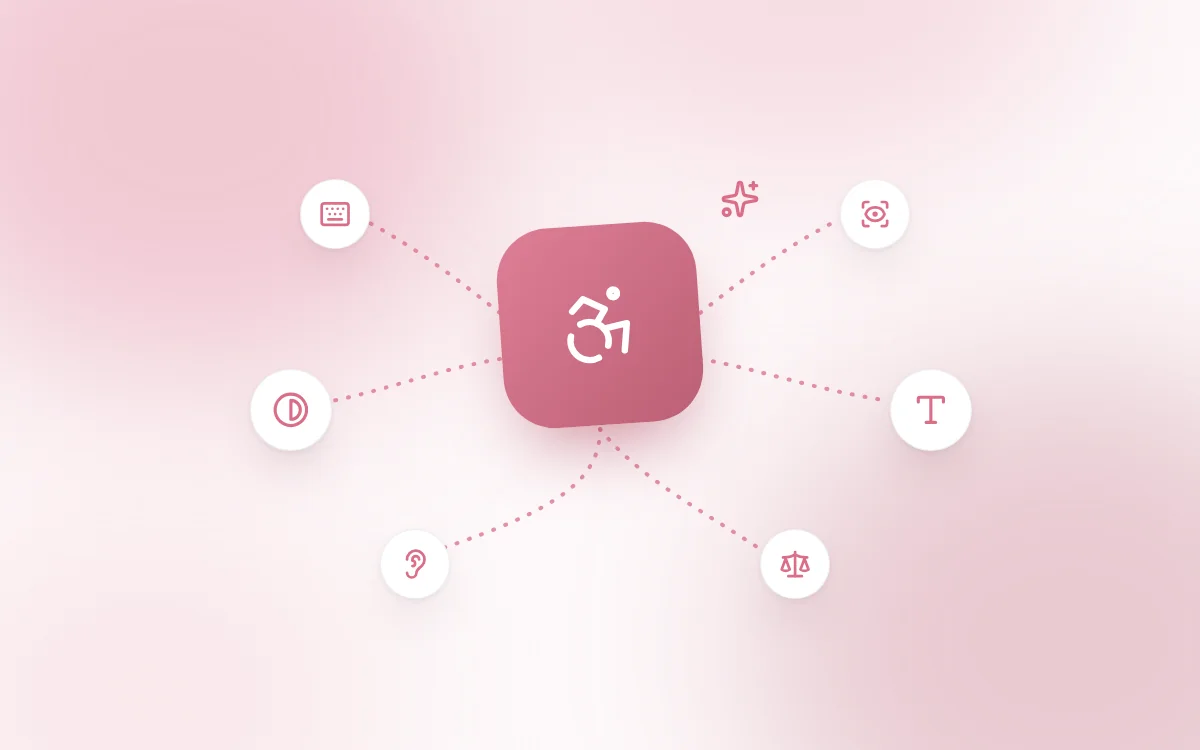
Web accessibility is no longer an ethical option or a usability bonus: it has been a major legal obligation since the European Accessibility Act came into force in June 2025. In 2026, RGAA compliance becomes a critical lever to secure your business, while boosting your SEO performance and your visibility on AI engines.
Long seen as a constraint reserved for the public sector, digital accessibility now applies to the entire European private sector. With the European Accessibility Act (EAA) coming into force on June 28, 2025, companies with key digital services (e-commerce, banking, transportation, essential services) must meet strict design standards. In 2026, the time for preparation is over: we are in the era of enforcement and inspection.
To navigate the 2026 regulatory landscape, it is essential to distinguish technical standards from legal directives. The WCAG (Web Content Accessibility Guidelines) is the international standard published by the W3C. It defines the universal technical rules (levels A, AA and AAA). In France, the RGAA (Référentiel Général d'Amélioration de l'Accessibilité, the French general accessibility improvement framework) is the official audit method. Currently in version 4.1.2, it relies on the WCAG 2.1 criteria to verify the compliance of interfaces. The European Accessibility Act (EAA), for its part, is the policy directive that harmonizes requirements across the EU. Unlike the RGAA, which initially targeted public administrations, the EAA imposes performance obligations on the private sector, with significant financial penalties for non-compliance. At Fragments Studio, we see that this convergence of standards finally simplifies things for Product Managers: a site that complies with RGAA 4.1.2 checks the EAA boxes almost automatically.
Since June 28, 2025, the obligation is no longer limited to companies with more than €250 million in revenue. The scope of the EAA is now defined by the nature of the service provided:
Only micro-enterprises (fewer than 10 employees and less than €2 million in revenue) still benefit from certain exemptions, although compliance remains strongly recommended so as not to cut yourself off from a market share representing nearly 15% of the world's population living with a disability.
A compliance audit relies on rigorous testing, but a few pillars dominate the user experience and compliance scores.
A user must be able to browse your entire site without a mouse. This means every interactive element must be reachable with the Tab key and that a visible focus indicator (often a high-contrast outline) shows the user's position. It is one of the most common friction points identified in our analysis of frequent UI/UX mistakes.
Screen readers (used by blind people) rely on the HTML code. Using <h1> to <h6> tags in the right order is not just a matter of style, it is a matter of usability survival. Every form must have explicit <label> elements and every decorative image must be ignored by bots (empty alt attribute), while informative images must be described precisely.
The WCAG AA standard requires a contrast ratio of 4.5:1 for normal text. In 2026, with the growth of outdoor mobile use, meeting these thresholds improves comfort for all your users, not just those with a visual impairment. It is a pillar of our approach as a UX/UI design agency.
If your site was designed before 2025, it probably carries accessibility debt. Here is the methodology we apply at Fragments Studio for effective compliance:
One of the most compelling arguments for investing in accessibility in 2026 is its direct impact on visibility. An accessible site is, by definition, a site whose code is clean, structured and explicit. Classic search engines and the new AI engines (Google AI Overviews, SearchGPT) favor content whose semantic structure is flawless. By meeting the RGAA criteria on headings and text alternatives, you make it easier for algorithms to index your content. What's more, improving Interaction to Next Paint (INP) (a key metric of the Core Web Vitals 2026) is often correlated with simpler scripts and better keyboard focus management. In short, accessibility is the foundation of a good GEO (Generative Engine Optimization) strategy: if an AI fully understands your structure, it is more likely to cite you as an authoritative source.
What is the main difference between the RGAA and the EAA? The RGAA is a French technical framework (the 'how'), while the EAA (European Accessibility Act) is a European directive setting legal obligations and deadlines for the private sector (the 'who' and the 'when').
What are the penalties for non-compliance in 2026? Penalties vary between member states, but in France they can reach administrative fines of up to €25,000 per service, renewable, not to mention the risk of civil litigation and damage to the brand image.
Can a React or Next.js site comply with the RGAA?
Absolutely. However, Single Page Application (SPA) frameworks require special attention to the dynamic management of the page title and to announcing content changes via aria-live for screen readers.
Is accessibility expensive to implement? Built in from the design phase, accessibility represents a negligible extra cost (about 3 to 5%). On the other hand, fixing an existing site ('remediation') can turn out to be complex and costly. The key is to adopt an Accessibility by Design approach.
In 2026, digital accessibility is no longer a niche technical topic, but a central component of companies' digital responsibility. The European Accessibility Act has transformed the landscape: compliance is now the standard. Beyond the legal aspect, making your site accessible means opening up to a wider audience, improving your SEO and preparing your interfaces for the era of generative engines.
Anticipating inspections and offering an inclusive experience is a strategic investment in the longevity of your product.
Follow Fragments Studio on Google
Add us to your preferred sources and our articles get surfaced first in Top Stories, AI Overviews and AI Mode.
 Design · 7 min
How to build a high-performing design system in 2026 without creating a bloated monster. A complete guide to tokens, Storybook and design governance.
 Design · 6 min
Transparency, error handling, human escalation, the right tone of voice: master the 7 rules for designing successful conversational AI interfaces.
 Design · 7 min
Figma Weave is changing the product workflow: node-based AI, faster prototyping, living documentation and closer collaboration between PMs, POs and designers.
Fragments Studio handles everything: from strategy to production.
Discuss my project