Metabase: a data dashboard to run your business in 2026
Metabase for SMBs: centralize your data, build dashboards and track your KPIs in real time. A comparison with Power BI and Looker, and the tool's limits.
 Tech · 4 min
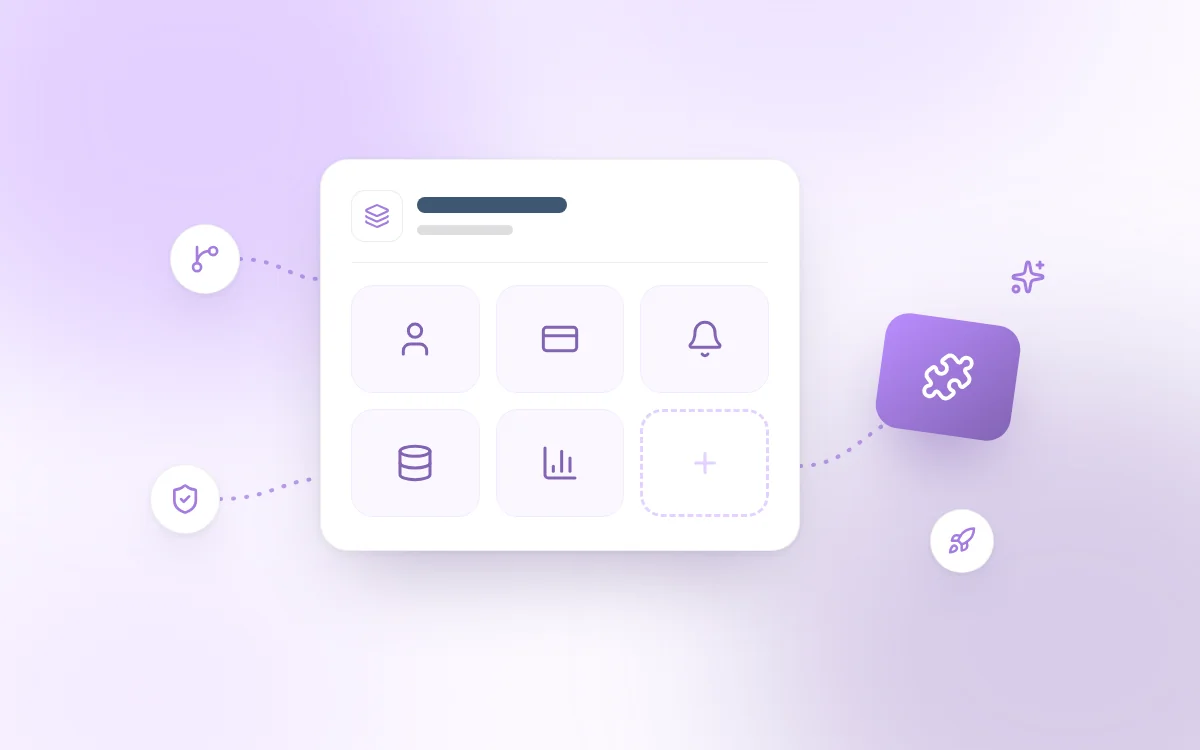
Designed from the start, modular architecture lets you evolve your tool without rewriting everything every time you add a feature. A real lever for the longevity of your projects.
Building a digital product is not just about delivering features. It is about thinking through how the tool will be able to evolve, be maintained, and adapt to business needs... without multiplying side effects with every update.
That is exactly what modular architecture enables: an approach that splits the product into autonomous, evolvable building blocks, rather than a fragile monolithic block.
It is a way of organizing code (and often infrastructure) where each feature is isolated in an independent module.
Each module:
This makes it possible to grow a tool without breaking everything with each addition or refactor.
As a CTO, you know that digital tools are alive. You add business rules, plug in APIs, pivot user journeys. And you often do it fast.
Without an architecture designed for this, every change becomes a risk:
Conversely, a well-modularized tool can:
Here are the best practices we apply at Fragments Studio from the design phase:
1. A well-divided functional domain
We start by identifying the business domains (orders, invoicing, user management...) to give them clear modules.
2. Well-defined internal APIs
Each module exposes an explicit interface (REST API or events) to interact with the others. No uncontrolled access to the code.
3. Controlled dependencies
We limit the links between modules to the bare minimum. Each building block can be mocked, tested, or even replaced painlessly.
4. Module-oriented CI/CD
We deploy modules independently whenever possible. This lets us ship more often, with fewer risks.
5. Separating the technical core from the business logic
We distinguish generic functions (auth, notifications, files...) from specific business logic, for more flexibility.
Concrete use cases
A common myth: "more modules = more complexity". In reality, a well-designed modular architecture makes it possible to:
Modular architecture is not reserved for tech giants. It is a strategic design choice, accessible from the MVP stage, that allows a product to grow cleanly.
At Fragments Studio, we build it in as soon as a tool is meant to evolve. Because the projects that last are rarely the ones that were built "fast"... but the ones that were designed to age well.
Need an audit of your current architecture or support with modeling your modules?
We can discuss it together and lay the foundations of a product that will withstand both growth and redesigns.
Follow Fragments Studio on Google
Add us to your preferred sources and our articles get surfaced first in Top Stories, AI Overviews and AI Mode.
 Tech · 6 min
Metabase for SMBs: centralize your data, build dashboards and track your KPIs in real time. A comparison with Power BI and Looker, and the tool's limits.
 Tech · 6 min
Using Cursor as a team in 2026: how to set up .cursorrules, share context, keep your code secure and compare Cursor with Claude Code and Copilot.
 Tech · 7 min
Scalable software architecture for SaaS in 2026: modular monolith or microservices, horizontal scaling, caching, message queues and the mistakes to avoid.
Fragments Studio handles everything: from strategy to production.
Discuss my project